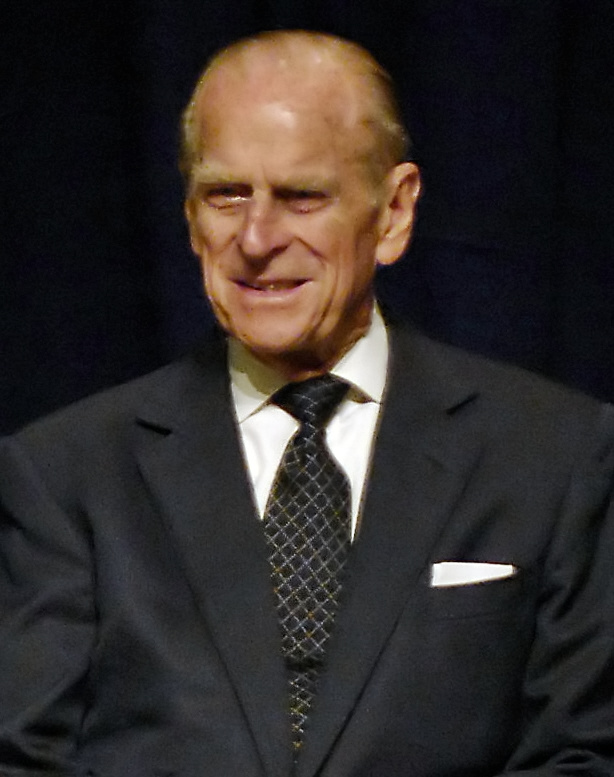
He was the youngest child and only son of Prince Andrew of Greece, fourth son King George I of Greece, and Princess Alice of Battenberg, a granddaughter of Queen Victoria.
2. Why was he a Prince of Denmark?
Philip's grandfather was elected King of Greece by the Greek National Assembly, before that he was Prince William of Denmark. William was the second son of King Christian IX of Denmark. He and his descendants retained their royal Danish titles. Even today, the exiled Greek royals are still have Danish royal titles.
3. How many siblings did he have?
Philip had four older sisters Margarita, Theodora, Cecilia and Sophie. They were all married to German princes by the time Philip was 10. World War II was difficult for him and his family because his sisters were in Germany--and he had brothers-in-law serving Hitler--while he was fighting in the Navy of his mother's homeland, England. None of his surviving sisters (Cecilia, her husband, two sons and unborn child were killed in a plane crash in 1937) were invited to his wedding in 1947 and he maintained discreet relationships with them, their children and grandchildren.
4. What was his name when he became engaged to Princess Elizabeth?
At the time of his engagement, he was known as Lt. Philip Mountbatten, R.N. He had voluntarily surrendered all of his royal titles and adopted the surname of his mother's English brothers at the time of his naturalization as a British subject earlier in 1947.
5. How many British Prince Consorts have been consorts longer than he has?
Technically, Prince Philip does not hold the title Prince Consort, although some hoped he would receive it as a 90th birthday honor. However, he is the longest serving male consort in British history: Philip of Spain was consort of Mary I for three years, George of Denmark was consort of Queen Anne for seven years, and Albert of Saxe-Coburg was Victoria's consort for nearly 22 years. Philip has been Elizabeth II's princely consort for 59 years as of February 2011. The longest-serving female consort was his and Elizabeth's shared great-great-great-great grandmother Queen Charlotte, wife of King George III.
6. What titles did his father-in-law give him?
King George VI gave his soon-to-be son-in-law the British royal titles of Duke of Edinburgh, Earl of Merioneth and Baron Greenwich on his wedding day. The day before the wedding, he made him a Knight of the Order of the Garter. (The last Duke of Edinburgh before him was Queen Victoria's second son, Prince Alfred.)
7. Who made him a Prince of the United Kingdom?
Even though he was a royal duke, he was not officially a prince again until his wife gave the title in 1957, nearly 10 years after their marriage and five years after her accession.
8. Which of his children will inherit his title when he dies?
The answer to this question is a very solid "it depends," and it depends on who's living and who's dead at the time. If The Queen is still alive, then Prince Charles, as the eldest son of a peer, will inherit Philip's title. When Charles eventually becomes king, the title will merge with the Crown and it can be recreated for someone else. If The Queen is alive and Charles is dead or he dies before becoming king, Prince William becomes Duke of Edinburgh. Then Harry, then Andrew, then Edward, then Edward's son James. If all of his male-line heirs are dead (a highly unlikely scenario), the title becomes extinct.
If Prince Philip outlives his wife, his title would merge with the crown immediately upon his death. In 1999, it was announced that The Queen intends for Prince Edward, their third son, to receive the title Duke of Edinburgh in the future. Whether he actually gets it or not depends on whether the new king, presumably his brother Charles, recreates it and gives it to him. Many people believe that this intended future inheritance is why Prince Edward was made an earl rather than a royal duke, as was traditional, upon his marriage.
9. What is his last name and what is its origin of his last name?
Philip's last name is Mountbatten. He chose this name for himself at the time of his naturalization. It was the name of his maternal uncles, the Marquess of Milford Haven and Earl Mountbatten of Burma, who helped raise him, helped him get into the British navy and championed him as a candidate for the hand of Princess Elizabeth. However, his uncles were not born with this name; they adopted it in 1917 when they renounced all of their German titles. They were descendants of a morganatic branch of the German ducal house of Hesse. Their branch of the family was known as Battenberg. When World War I caused massive anti-German feeling in Britain, their father First Sea Lord Prince Louis of Battenberg anglicized the name to Mountbatten and accepted the lower British title of Marquess of Milford Haven, which was later inherited by eldest son. His youngest son later was made an earl. Incidentally, despite having lived in England and served honorably and well in the British navy in 50 years, Prince Louis was forced to retire as First Sea Lord before the end of the war. The name change and demotion in rank did not affect his daughters, one of whom was Philip's mother, because they were already married.
The choice of his mother's "family" name likely reflects Philip's feeling of closeness to her family as well as his own desire to appear more British at the time of his marriage to the British heiress presumptive. It was also a simpler name to use as his father's royal house was Schleswig-Holstein-Sonderburg-Glucksburg. Anglicizing that would have been far more complicated!
10. Where in the world is he worshipped as a god?
Among the islands of the South Pacific, there is a family of religions referred to as "cargo cults." Inspired by the arrival of ships full of white men and life-altering supplies, as well as luxury items, especially during and immediately after World War II, the local peoples came to believe that these items were being sent to them by their deities. One cultural group on the island of Tanna in Vanautu had a legend that one of their ancient spirits had traveled over the sea to marry a powerful lady. Stories about the husband of the Queen of England apparently convinced them that Prince Philip was that divine spirit. When he and The Queen visited Vanautu in 1974, they thought their god was returning. A reality show in 2007 brought several members of the group to Britain to experience British culture and to (hopefully) see their god again. Although the audience was not filmed for the program, the men did get to meet Prince Philip in person to give him gifts. He gave them a photograph of himself.